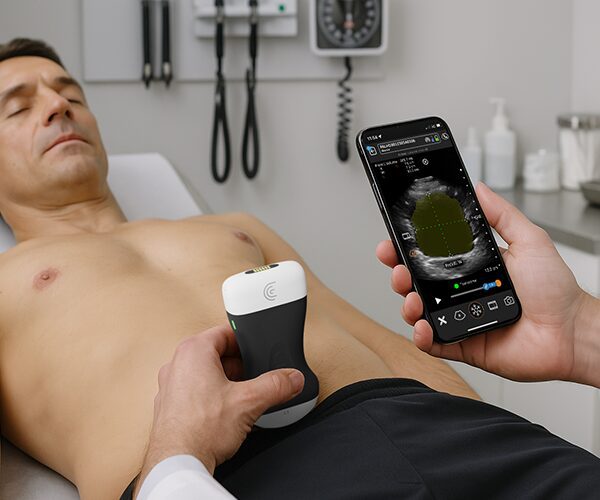
0:00Hello, I'm Dr. Gina and today I'm so excited to show you how we are going to be evaluating and scanning for facial threads using high frequenc ultrasound.
0:1111 secondsCome with me. So the first thing I need to make sure is that we are using the correct parameters. I'm using our aesthetics and I'm using the cheek
0:2020 secondsparameter which is already uh made ready for us. You don't have to work on the depth or the gain. If you do want, you
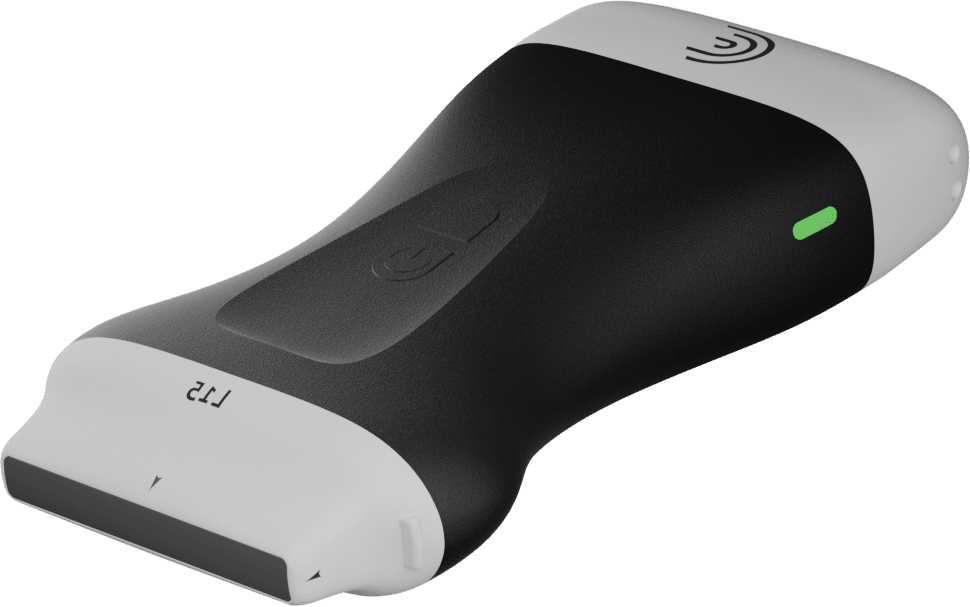
0:2828 secondscan still change the gain. I'm using the linear probe and without putting a lot
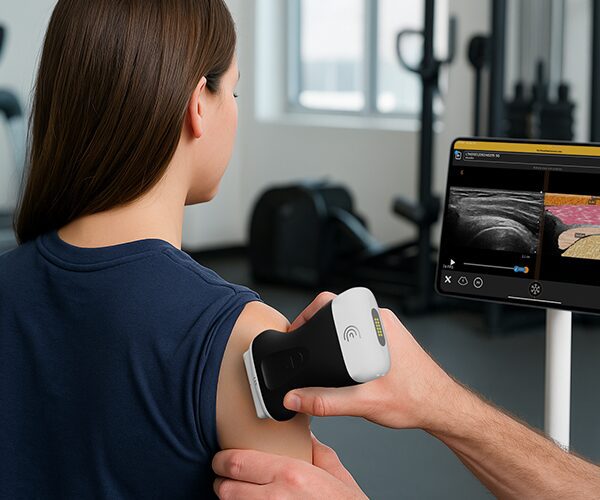
0:3434 secondsof pressure, I am going to start to scan the areas that already the patient told
0:4242 secondsme that she had done the procedure. Her procedure was done two years ago in 2024.
0:5050 secondsThe threads are uh nonbiodegradable threads. The inside of the thread is
0:5757 secondsmade the on her case was made with polyester and the outside silicone. So it's something that I think we can see.
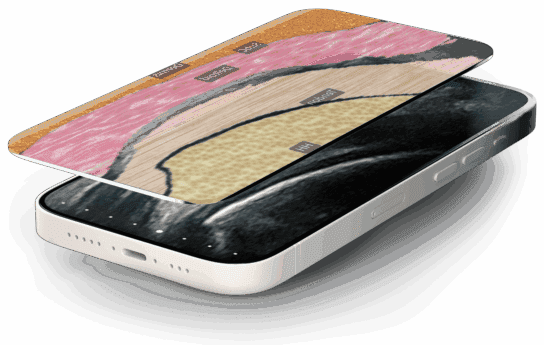
1:071 minute, 7 secondsAs you can see here on this image, the ultrasound, you can see the bone and this mass. But when you move a little
1:161 minute, 16 secondsbit further, we should find a much more hypercoic structure, linear structure,
1:251 minute, 25 secondswhich is going to be much more hypercoic than the surrounding structures. And that will be telling us that we found
1:341 minute, 34 secondsthe thread. Ah, here we just pass it. Let me find. There it
1:421 minute, 42 secondsis. It's a linear structure that is holding into this mass. So the goal when we are doing a thread lift is to pass
1:521 minute, 52 secondsthrough the fat pads connect the fat pads in between each other and hold it make it stabilized
2:032 minutes, 3 secondsat this mass layer. So as you see here there is a very obvious thread right
2:102 minutes, 10 secondsthere on top of this mass. You can see even around it there is a little bit of inflammatory
2:172 minutes, 17 secondsuh tissue a little bit of hypocoic accumulation of liquid which is very normal
2:272 minutes, 27 secondswhen we are seeing a thread that is nonbiodegradable. Also the biodegradable ones you can see but you
2:352 minutes, 35 secondssee it earlier with the thread that is non biodegradable you can see it even after one year two years because it's
2:432 minutes, 43 secondsreally according to the the patient itself and the metabolism. The goal of the thread of course is to uh create
2:502 minutes, 50 secondscollagen around each thread and keep that effect even if the thread gets absorbed later. So what we can see as
2:592 minutes, 59 secondswell, we can change the direction of the probe and see if we can find the thread,
3:073 minutes, 7 secondsthe hypercoic in a more perpendicular way with a perpendicular view.
3:143 minutes, 14 secondsCan be a little bit more difficult, but it can give us some acoustic shadowing and artifacts that makes it easier. As
3:233 minutes, 23 secondsyou can see here, I found it. Ah, there you go. You can see here that's a thread in between this
3:323 minutes, 32 secondsmass fibers. Now, I like to change the mold to power doper
3:413 minutes, 41 secondsto see the relationship of the thread which here you can see it's a little in the subcutaneous tissues. Do you see the
3:483 minutes, 48 secondsmore hypercoic part? the more hypercoic line. You can see it's one of the threads. She had several. And you can
3:583 minutes, 58 secondscheck the relationship of the thread with the vessels because if it's too close to a vessel or if it's crossing a vessel or compressing a vessel, it's
4:074 minutes, 7 secondssomething that should be observed because it can create uh complications.
4:134 minutes, 13 secondsSo, as you can see, none of the vessels are in a relationship with the thread.
4:204 minutes, 20 secondsThat could be uh dangerous.
4:244 minutes, 24 secondsStill, I like to scan the whole area where I know she had um thread lifting
4:314 minutes, 31 secondsto check and also accompanying the trajectory of the thread.
4:414 minutes, 41 secondsHere the thread is also the important thing is to accompany while we are accompanying the trajectory
4:494 minutes, 49 secondsof the thread to check if it's in the correct depth if it's uh homogenically placed.
4:594 minutes, 59 secondsAnd we can see that the thread is from subcutaneous tissue passing through fat pads. And the beginning of the thread and the end
5:075 minutes, 7 secondsof the thread should be closer to this mass.
5:145 minutes, 14 secondsone of the threads. I know we found it earlier around here. Ah, there we go.
5:195 minutes, 19 secondsThis is very hypercoic area there close to the
5:265 minutes, 26 secondscanine fossa. As you can see, you can even see the teeth here when I
5:335 minutes, 33 secondstilt the probe like this. So, yes, this side everything is okay. We can even continue to scan maybe one, two, three
5:435 minutes, 43 secondsmonths later to see if there is any change and also the interaction with her own tissue. Never forget to do it bilaterally. So you can see and check
5:525 minutes, 52 secondsfor any h uh asymmetries. But this is for today. This is our thread lifting um
6:006 minutesanalysis using the high frequenc. Hope to see you soon. Bye-bye.