





In the second part of our exclusive sit-down with Dr. Roya Zarmehr Zamin, the conversation shifts from the “why” to the “how.” For many aesthetic clinicians, the transition from traditional “blind” injections to ultrasound-guided procedures feels like a steep climb. But as Dr. Zamin explains, the view from the top is not just clearer—it’s significantly safer.
“The facial vascular anatomy is very complex… and because it’s complex, you never know what is beneath the skin and which layer the vessels are running through.”
Watch this video interview with Dr. Zamin to learn more about how ultrasound has transformed her practice by allowing her to see individual anatomical landmarks in real-time. She also explains why she recommends the Clarius L20 HD3 high frequency ultrasound scanner for facial aesthetics. Scroll down for highlights.
The Myth of the “Safe Zone”
One of the most provocative takeaways from Dr. Zamin’s interview is her stance on clinical safety zones. While many injectors are taught that certain areas of the face are “safer” than others, Dr. Zamin challenges this notion with real-time data.
There is no safe zone in the face,” she asserts.
Every patient presents a unique roadmap of arteries, veins, and nerves. By using the Clarius L20 HD3, she demonstrates that vessels can vary not just between patients, but even between the left and right sides of the same person’s face.
Key Clinical Highlights: Precision in Practice
Zero-Pressure Scanning: Dr. Zamin emphasizes the “zero-pressure” technique. Pushing too hard with the transducer can compress the very vessels you are trying to find, leading to inaccurate mapping.
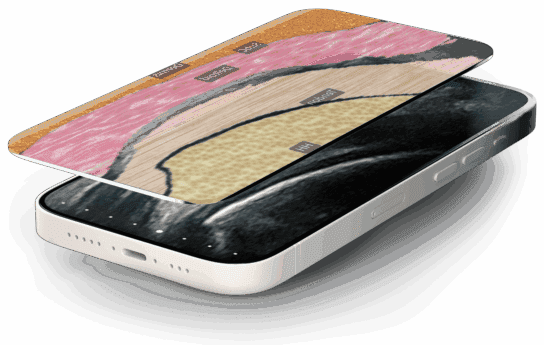
The Power of Presets: Using the dermatology and facial presets on the Clarius app allows clinicians to toggle between viewing superficial skin damage and deep muscular structures like the temporalis or orbicularis oculi.
Needle vs. Cannula Decisions: In one striking example, Dr. Zamin locates a branch of the angular artery directly on the bone. Her takeaway? “I’m not going to use a needle here. I’m going to use a cannula… with the guide of ultrasound.” This real-time decision-making is the difference between a routine procedure and a potential vascular emergency.
Moving Beyond Blind Injections
For the modern clinician, ultrasound is more than a safety net; it’s a tool for customized anti-aging. Dr. Zamin uses imaging to assess the aging process—checking for dermal thinning or sun damage—before even touching a filler syringe. This allows for a “tailored, customized treatment” that addresses the specific needs of the tissue.
I hope that you learn this technology as fast as you can… the ultrasound for the face never ends.”
Integrating ultrasound isn’t about replacing your anatomical knowledge; it’s about verifying it. As Dr. Zamin proves, when you can see through the skin, your confidence as a clinician grows, and your patient’s safety becomes a measurable certainty rather than an educated guess.
In her interview, Dr. Zamin bridges the gap between high-level clinical medicine and the practical artistry of aesthetics. She highlights that achieving “safe results” isn’t just about having an ultrasound; it’s about the quality of the image and the depth of the practitioner’s training.
The Critical Role of Image Quality
Dr. Zamin emphasizes that facial aesthetics is a “game of millimeters.” Because facial anatomy is so superficial, a standard ultrasound isn’t enough. She specifically highlights the Clarius L20 HD3 for these reasons:
Ultra-High Frequency (8–20 MHz): She notes that you need the highest frequency possible to see the most superficial layers. For example, she identifies the epidermis at just 0.7 mm thick—a level of detail only possible with a specialized high-frequency scanner.
Resolution and Contrast: She explains that high resolution is necessary to distinguish between hyperechoic (bright) structures like the epidermis/deep dermis and hypoechoic (dark) structures like subcutaneous fat.
Customized Anti-Aging: With clear imaging, she can see signs of photo-damage or “SLEB” (Subepidermal Low Echogenic Band). This allows her to tailor energy-based device settings or needle depths to the specific level of a patient’s skin damage.
Free Webinar: Dr. Zamin teaches her FACT Protocol for Facial Aesthetics
Join us for a practical 1-hour webinar with Dr. Roya Zarmehr Zamin as she breaks down the FACT Approach—a systematic framework to simplify facial ultrasound and maximize patient safety.
March 10, 2026 – 2 PM Pacific | 5 PM Eastern | 10 PM British | 11 PM Central EU
(March 11, 2026 – 7 AM Korea | 9 AM Australia Eastern | 11 AM New Zealand)
Dr. Zamin’s Professional Background
Dr. Zamin isn’t just a user of Clarius technology; she is a global authority in the field. Her background provides a foundation of trust for the “FACT” protocols she teaches:
Decades of Experience: She is an MD with over 30 years of medical experience, 21 of which have been dedicated exclusively to aesthetic medicine.
Global Trainer: Since 2021, she has been an International Aesthetic Expert and Trainer, having taught thousands of dermatologists and surgeons worldwide. She also serves as a Medical Advisor and instructor for Clarius.
Business Leadership: She is the founder of the DRZ Medaesthetics Academy (with branches in Canada and Dubai). The academy focuses on training licensed medical professionals to achieve clinical competency in aesthetic applications, including neuromodulators (Botox) and dermal fillers.
Scientific Faculty: She is a regular faculty member at prestigious global congresses like IMCAS (International Microsurgery Course on Aesthetic Surgery), where she presents on complications and ultrasound-guided toxin and filler techniques.
Why Clarius Ultrasound is a Popular Choice for Aesthetic Physicians
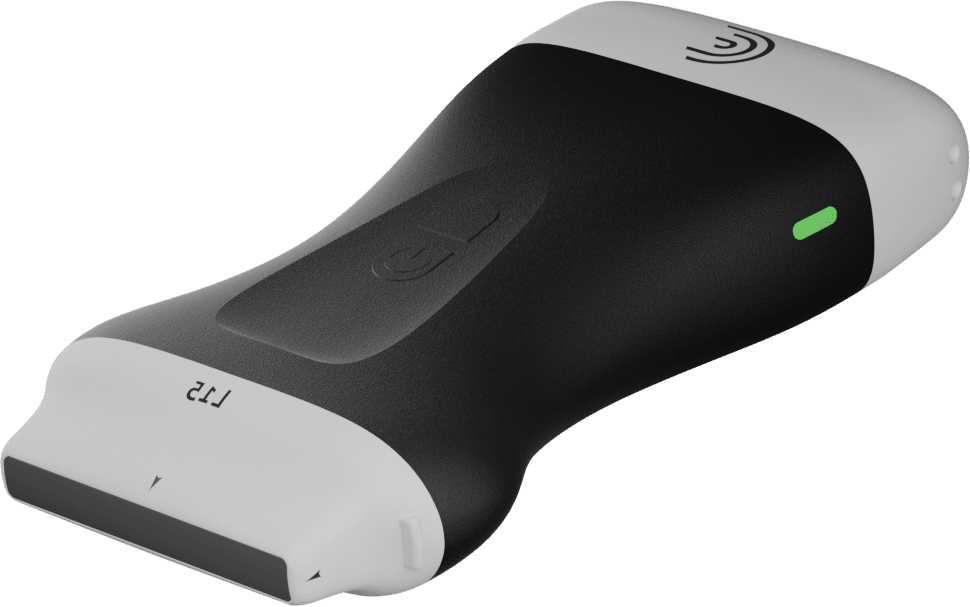
The miniaturization and reduced cost of handheld ultrasound devices are making high-quality ultrasound scanning accessible to aesthetic professionals. The Clarius L20 HD3 is the world’s only ultra-high-frequency (8–20 MHz) wireless scanner with specialized software for aesthetics, providing high-resolution superficial imaging up to a 4 cm depth, ideal for facial anatomy. Learn more about Clarius AI-powered ultrasound on the aesthetics specialty page. Or contact us for a personalized virtual demonstration.