





When evaluating carpal tunnel syndrome (CTS), one of the most common outpatient musculoskeletal (MSK) conditions, traditional diagnostic pathways often present significant bottlenecks. Referring patients out for nerve conduction studies (NCS) introduces unnecessary delays, high costs, and significant patient discomfort.
During a recent Clarius webinar (Ultrasound for Carpal Tunnel Syndrome: Revolutionizing the Diagnostic Workup), Dr. John Fowler, a board-certified orthopaedic hand surgeon at the University of Pittsburgh Medical Center (UPMC), demonstrated why point-of-care ultrasound (POCUS) is rapidly replacing nerve conduction studies as a first-line confirmatory test for CTS.
To see the live demonstration and detailed research breakdown, watch the free one-hour webinar with Dr. John Fowler, available on-demand now.
Below are the key takeaways, research data, Q&A insights, and workflow efficiency benefits presented by Dr. Fowler for MSK clinicians looking to master point-of-care ultrasound for carpal tunnel syndrome.
1. The Flaws of Routine Nerve Conduction Studies (NCS)
Despite American Academy of Orthopaedic Surgeons (AAOS) guidelines changing in 2016 to make pre-operative nerve conduction studies optional rather than recommended, 55% of Hand Society members still routinely order them.
Dr. Fowler highlighted several major drawbacks of relying solely on NCS:
- High False-Positive and False-Negative Rates: Classic research (Atroshi et al., JAMA 1999) shows that 30% of patients with clinically certain CTS had normal nerve studies (false negatives), while 18% of completely asymptomatic individuals tested positive (false positives).
- Inability to Predict Surgical Outcomes: Pre-operative nerve studies do not predict whether a patient will experience symptom resolution following carpal tunnel release.
- Patient Discomfort and Inefficiency: NCS can be painful, expensive, and require secondary appointments that delay definitive treatment.
2. Ultrasound vs. Nerve Studies: What the Data Shows
When a patient presents with symptoms, a surgeon requires a confirmatory test with high specificity to avoid operating on a false positive.
Across multiple prospective clinical studies conducted by Dr. Fowler and his team at UPMC, POCUS was noted to provide the following benefits:
- Superior Specificity: In a 402-patient study comparing CTS-6 clinical scoring, NCS, and ultrasound, POCUS demonstrated a significantly lower false-positive rate compared to NCS.
- High Negative Predictive Value: In a latent class analysis, POCUS demonstrated a 99.4% negative predictive value. A normal median nerve cross-sectional area (CSA) on ultrasound allows clinicians to confidently rule out carpal tunnel syndrome.
- Uncovering “Normal” NCS Cases: In patients with classic CTS symptoms whose NCS returned normal, POCUS detected an enlarged median nerve (CSA > 10 mm²) in 68% of hands, providing an objective diagnosis when electrodiagnostics failed.
If I do an ultrasound and it is normal, I feel fairly confident that that negative value is accurate,” says Dr. Fowler.
3. Fast Learning Curve and Diagnostic Precision
A common hesitation among MSK providers is the perceived learning curve of ultrasound. Dr. Fowler’s research demonstrates that mastering median nerve visualization requires minimal training:
- Rapid Skill Acquisition: Orthopaedic residents and fellows correctly identified and measured the median nerve only 36% of the time prior to instruction, frequently confusing it with the flexor carpi radialis (FCR). Following a 5-minute, 3-slide teaching session, their accuracy jumped to 97%.
- High Inter-Rater Reliability: Measurement agreement between novice and expert scanners shows strong statistical consistency.
- Measurement Cutoff: At UPMC, a median nerve Cross-Sectional Area (CSA) of > 10 mm² at the wrist crease serves as the baseline threshold for CTS.
4. Clinical Workflow and Revenue Benefits
Integrating POCUS into daily practice directly improves patient satisfaction, clinical speed, and practice economics.
- Faster Care Delivery: Performing point-of-care ultrasound enables patients to get into the operating room 3 to 4 weeks sooner while saving an average of 1.8 medical visits.
- Overwhelming Patient Preference: Utilizing Net Promoter Scores (NPS), 95% of patients were promoters of ultrasound, whereas 75% were detractors of nerve conduction studies due to pain and inconvenience.
- Practice Revenue: Billing for limited diagnostic ultrasound (CPT 76882) or ultrasound-guided injections (CPT 76942) in the United States can generate substantial practice revenue, ranging from $44,000 to more than $140,000 annually depending on patient volume.
In my group of patients, I did the ultrasound myself. We were able to get patients into the operating room 3 to 4 weeks sooner, and we saved them, on average, 1.8 fewer medical visits,” Dr. Fowler notes.
Video Demonstration: Ultrasound for the Assessment of Carpal Tunnel Syndrome (CTS)
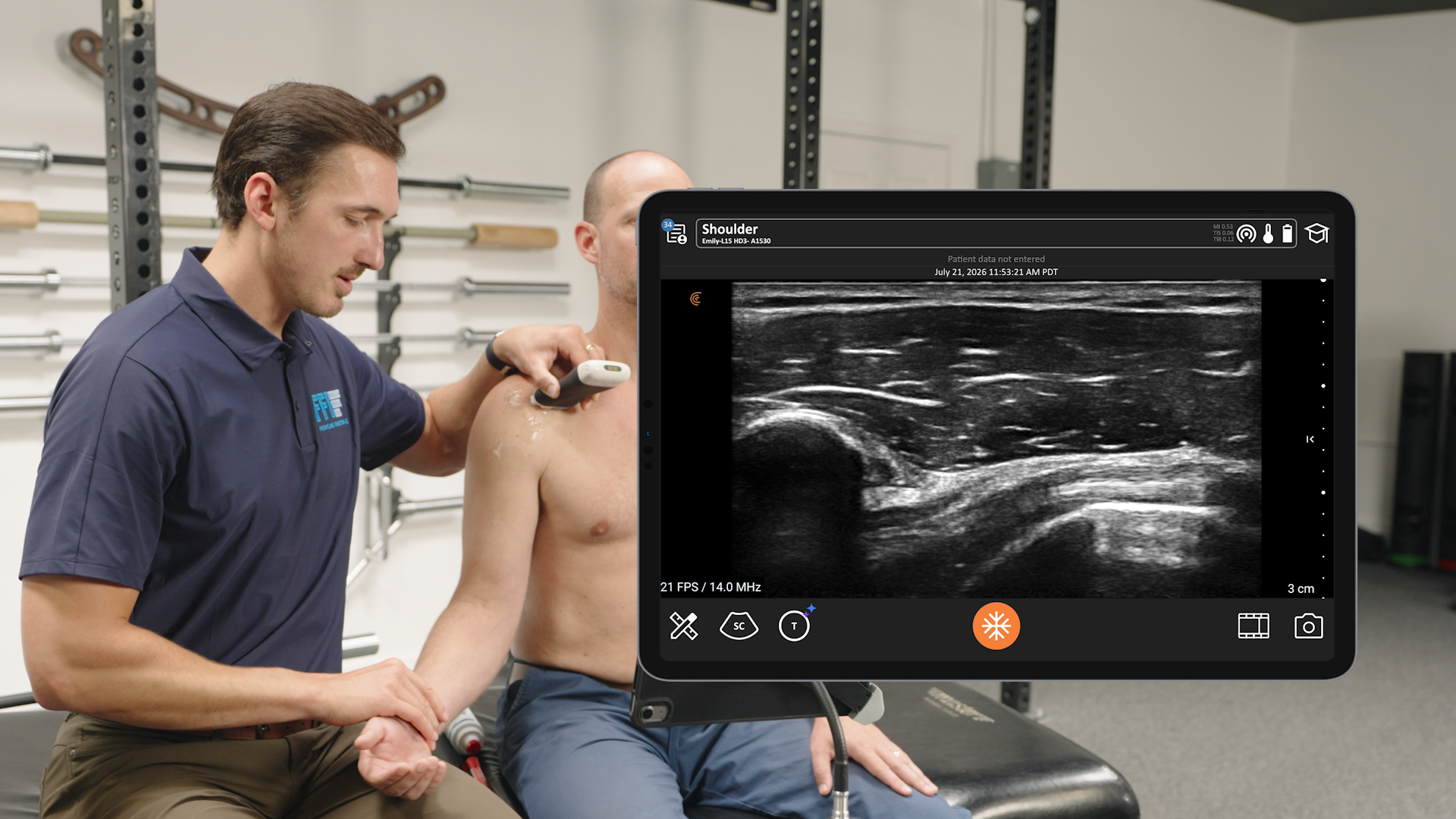
Watch this 6-minute video to see Dr. Fowler demonstrate the median nerve ultrasound technique in the evaluation of carpal tunnel syndrome using the Clarius L20 HD3 ultrasound machine.
Why the Clarius is the Ideal Choice for MSK Practice
During the webinar, Dr. Fowler and the Clarius team demonstrated how the Clarius wireless high-frequency POCUS removes technical barriers in outpatient settings:
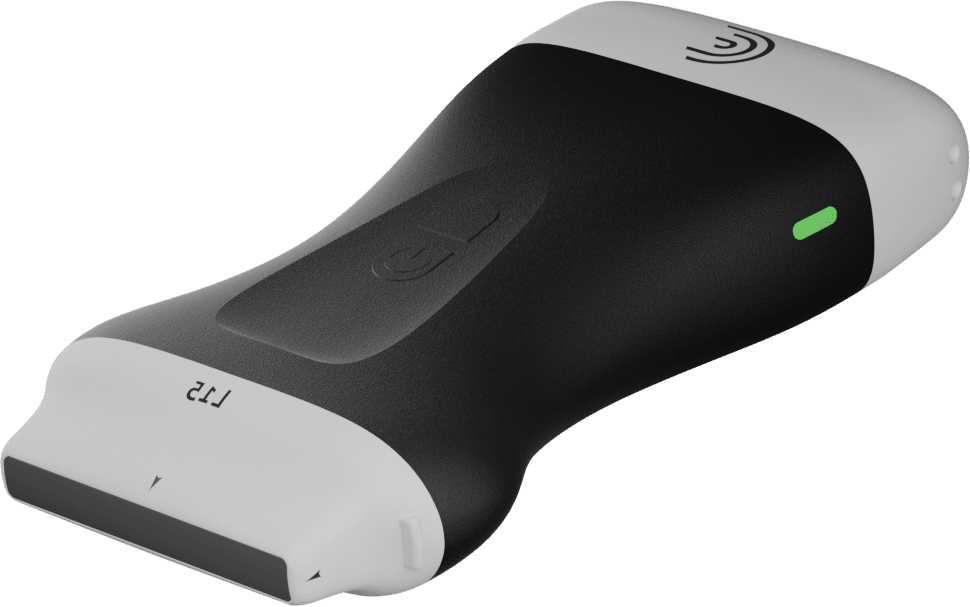
- Equivalence to Cart-Based Systems: Dr. Fowler published a direct comparison between a traditional $50,000+ cart-based system and the Clarius L20 HD3 handheld ultrasound machine. The study found no statistically significant difference in median nerve CSA measurements between the two systems.
- Clarius Median Nerve AI: Clarius features an automated Artificial Intelligence tool that instantly identifies and segments the median nerve in green, providing an automatic CSA measurement.
- Quality Control Indicator: The Median Nerve AI model only segments the nerve when a clear, perpendicular image free of anisotropy is achieved, serving as a built-in quality check for less experienced operators.
- Zero-Footprint Portability: Cable-free operation makes the scanner easy to maneuver around patients, simple to disinfect, and completely portable between exam rooms.
Video Demonstration: Clarius Median Nerve AI
Watch this 2-minute video to see how Clarius Median Nerve AI helps to locate and measure the median nerve in Carpal Tunnel Syndrome assessments.
Audience Q&A with Dr. John Fowler
Q: Does probe pressure affect cross-sectional area measurements during scanning?
Dr. Fowler: “Minimally. We actually went into cadavers with a pressure sensor and started pushing down… it really minimally changed the number. Probe angle can actually affect your measurements much more than pressure.” (Note: Maintaining a perpendicular angle to the nerve is essential to avoid anisotropy).
Q: How does ultrasound help evaluate patients with persistent symptoms after carpal tunnel release?
Dr. Fowler: “In those cases where there is a failure… it is very nice to do the ultrasound injection. And if they get better from the injection, I’m thinking that it’s likely coming from the carpal tunnel. And if they don’t get better, then it could mean there’s something else going on, such as radiculopathy, neuropathy, or proximal compression.”
Q: How do you handle diabetic patients or high BMI cases where median nerve values are elevated?
Dr. Fowler: “Diabetes definitely drives up the median nerve cross-sectional area… In our study, people with diabetes had a mean median nerve cross-sectional area of 14.5 mm². Watch out for ‘mega nerves’ (>19 mm²), as they are more likely in patients with higher BMI and diabetes.”
Q: Is this technology valuable for physicians who are not hand surgeons (e.g., PCPs or Sports Medicine)?
Dr. Fowler: “I think it’s maybe more valuable. One of the more frustrating things I see is getting people referred in with nerve tests when they have no symptoms… Ultrasound is a very touch-intensive thing, and patients love it.”
Transform Your CTS Diagnostic Pathway
Point-of-care ultrasound offers a faster, highly accurate, and pain-free diagnostic workflow for carpal tunnel syndrome. By integrating high-resolution handheld imaging like the Clarius L20 HD3 into your practice, you can deliver instant clinical answers, reduce unnecessary referrals, and elevate patient care.
If you’re interested in learning more about Clarius ultrasound for your MSK practice, a Clarius expert is available to provide a custom virtual demonstration.
About Dr. John Fowler
Dr. Fowler is a board-certified orthopaedic hand surgeon in Pittsburgh, PA, specializing in hand, upper extremity, and microvascular surgery at UPMC. He received his medical degree from Lewis Katz School of Medicine at Temple University, and completed his fellowship at the University of Pittsburgh Med School. As an Associate Professor at the University of Pittsburgh School of Medicine and Co-Director of the Hand Surgery Fellowship, he focuses on carpal tunnel syndrome, nerve injuries, and minimally invasive techniques.